
By Velicia Jerus Darquenne
A grandmother’s love
A year ago, my grandmother had a stroke.
That sentence still feels strangely inadequate for what it means.
There are events that happen inside the ordinary architecture of a day and quietly split your life into a before and an after. A phone call. A hospital room. A prognosis. Suddenly there is the person you knew before that moment and the person you are left with because of it.
My grandmother would eventually die on her 75th birthday.
There is something almost offensively poetic about that. The kind of detail that feels invented when you write it down. Seventy-five years arriving at the exact moment there would be no 76.
For a while, it was difficult not to let the ending swallow everything that came before it.
The stroke. The waiting. The fear. The fact that I missed seeing her by less than 24 hours. The strange bargaining for just a little more time that grief makes you do, even when there is no one taking offers. The last days. Her birthday. Her death.
But ultimately, I find myself thinking less about how my grandmother died and more about how she lived.
And, increasingly, about the ways she is still living.
In me.
Not in the vague way we sometimes talk about people who have died — she’ll always be with you — as though grief turns everyone into a benevolent ghost hovering somewhere nearby.
I mean literally.
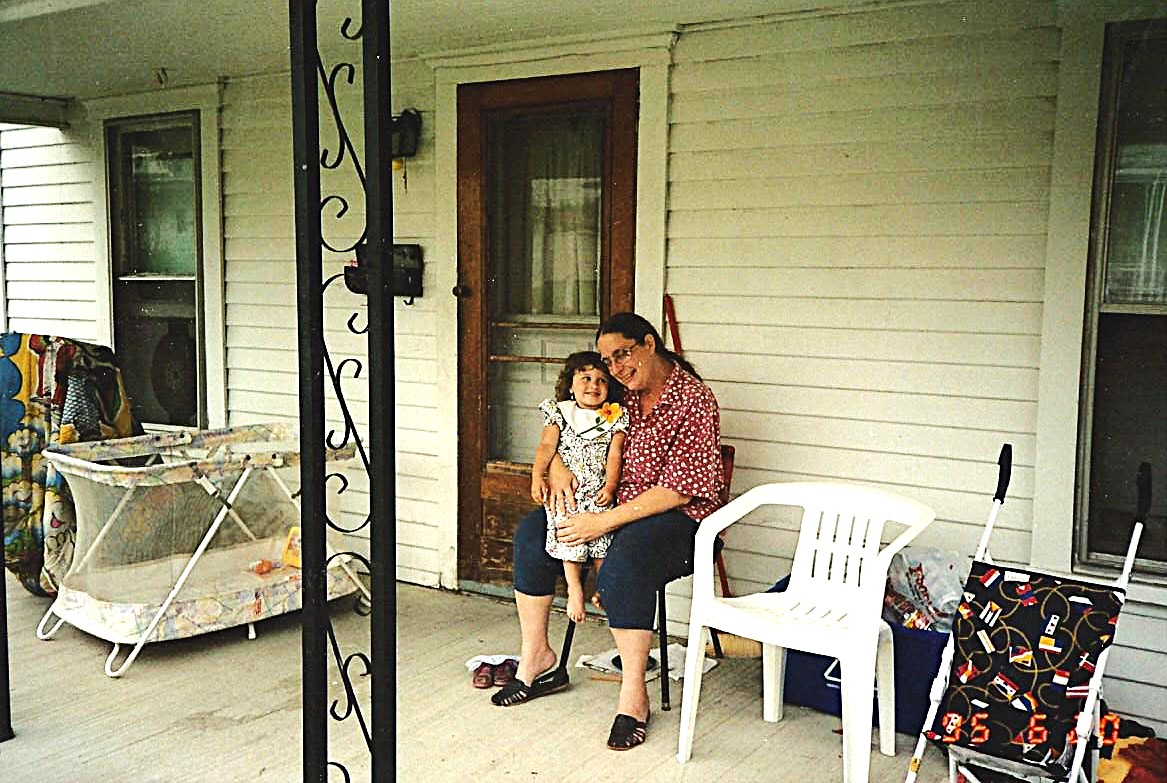
There are things I do because she did them, like painstakingly spread the peanut butter to the edge of the bread for every PB&J. There are things I believe because she taught me to believe them, like that birth control was not just about sex; it was about knowing that if a man ignored my consent, I would not be the one left carrying the consequence. The way I learned, and had to unlearn, how to love was by first watching her love endlessly, unconditionally, and to a fault. There are parts of my personality I can trace backward like a family tree.
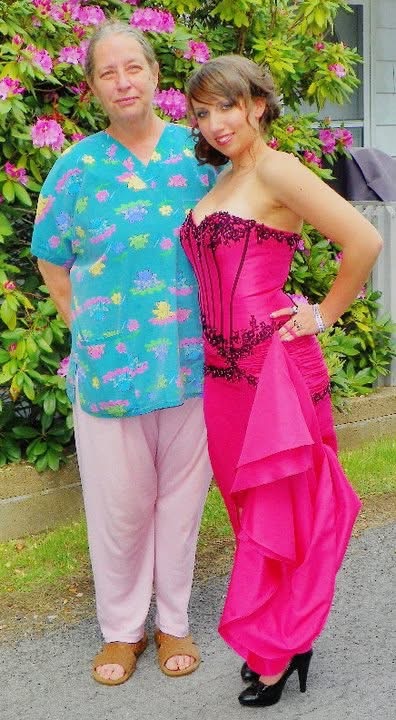
And the older I get, the more I understand that what I inherited from my grandmother was not just tenderness, ritual, or the ways she cared for people. I inherited the shape of how she survived.
There are many qualities in myself that I once believed appeared independently — or even in opposition to her choices. But there is one I know I inherited directly: My ability to endure.
That was her.
I could weather pain, abuse, lies, manipulation, disappointment — and somehow remain soft enough to love afterward. For a long time, I thought that was the whole lesson. Endure. Stay standing. Keep loving. Survive.
But eventually, I understood that she had already carried that proof for both of us.
She had shown me exactly how much a woman could survive. I did not need to retrace her pain to know that same strength lived in me. I did not need to make the same sacrifices to understand their cost. I did not need to stay until I reached the outer limits of my own endurance just to know they were there.
I could learn from the road she walked without walking every mile of it myself. I could recognize the storm without standing in it. I could leave before survival became the only thing left to be proud of.
She had already shown me how much we could endure.
I didn’t have to prove it again.
My capacity to endure may be enormous. That does not mean everyone is entitled to test it. I did not have to follow her path simply because I inherited her strength.
And this is where our stories split.
My grandmother stayed.
She stayed in an unhealthy marriage. She endured what loyalty asked of her, even when loyalty demanded too much. She sacrificed relationships and buried the damage to ensure that marriage stayed intact. She survived a life I do not believe she would have chosen for me to repeat.
My grandmother died believing I was in a happy, loving, supportive marriage. I know that mattered to her. I know she was relieved to believe I had found something safe — someone who could see all my rough edges and love me softly anyhow.
She died believing I had escaped the kind of pain she knew too well.
I had not. Not yet, anyhow.
Two weeks after her death, I fled a marriage after discovering that my spouse had told another woman they were “a lil sad” that their fantasies of my accidental death had not come true.
I remember staring at those words and understanding, all at once, that I could never unread them — and that I should never have had to. The kind of message that belongs in a case file, not a marriage.
Some truths become impossible to unsee once they are written down. Some sentences rearrange your life the moment you finally allow yourself to say them plainly.
This was both.
Death strips away the illusion that there will always be more time.
More time to be honest.
More time to change.
More time to stop calling survival a life.
My grandmother’s death did not end my marriage. But losing her made it impossible to keep pretending that enduring what was happening to me was some noble extension of the strength she had given me.
And I would like to believe she would be proud of me for getting the divorce she never did.

My ability to leave was built, in part, from watching her survive. She gave me the strength. I simply used it differently.
And I want to be careful not to reduce her life to the choices I made differently. She was a woman before she was my grandmother.
She had desires, disappointments, dirty jokes, private fears, regrets, and versions of herself I never met. Grandmothers are so easily flattened into recipes, holidays, old sayings, and photographs at birthdays. She was a daughter, a sister, a woman.
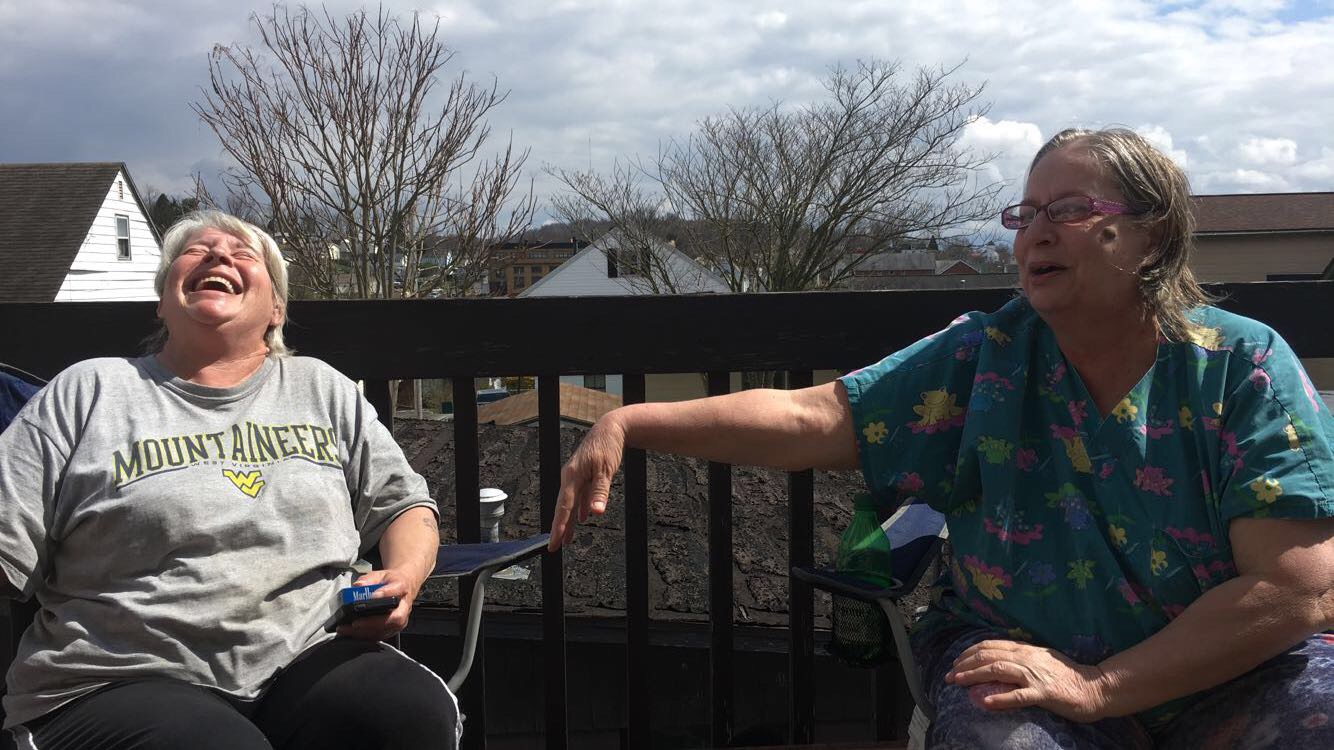
But she was not born a wife or a grandmother. She became one.
And somewhere in the becoming, she helped shape me.
Maybe that is what inheritance is supposed to be. Inheritance does not have to be passive acceptance or destined replication. It can be a chosen evolution.
The women before us give us what they have, so that we can decide what it becomes in our hands. Some things we carry forward. Some things we soften. Some things we refuse to repeat. Some things we finally give ourselves because the women before us could not. And some things we transform into something neither of us knew they could become.
A year ago, I began losing my grandmother. I did not understand then that I would spend the year afterward finding her again.
In memories. In family jokes. In photographs I did not know existed. In the things I endured. In the things I finally chose not to.
In loving memory of Debby “Mammy” Darquenne. December 5, 1950 – December 5, 2025.
Categories: Living, Sister Sirens


