


What do award-winning singer Billie Eilish and established award-winning author Joyce Carol Oates have in common? Both are successful women in the twenty-first century, and both have used their platforms to criticize Elon Musk for being a gluttonous troll of a capitalist pig who is predicted to become the world’s first trillionaire.
The idea of a trillionaire is disgusting. The gargantuan scale of a trillion dollars in time and monetary terms is a bloody kraken of a quantity. A trillion is one million MILLION and has twelve zeroes: 1,000,000,000,000.
What do you call a trillion of anything? A bloat, a surfeit, an exorbitance, a travesty. Eilish and Oates are both critical of Musk, though for different reasons. On Instagram Stories, Eilish puts Musk on blast because his immense wealth could help find solutions for problems like world hunger, saving endangered species, and rebuilding war-torn countries, like Ukraine and Gaza. Eilish ends her critique by calling Musk a, “F—ing pathetic p—y bitch coward.”

Oates chooses a different vernacular and the social media platform, X, which happens to be owned by Musk. She calls him “uneducated” and “uncultured,” and observes, “So curious that such a wealthy man never posts anything that indicates he enjoys or is even aware of what virtually everyone appreciates…. The poorest persons on Twitter may have access to more beauty & meaning in life than the ‘most wealthy person in the world.’” Musk may have wealth, but he has a puny soul. He never stops to smell the coffee, or listen to the roar of the ocean, or watch an ant carry a gigantic crumb home to feed its entomological comrades.
Greed is Musk’s problem, and it’s one of the seven deadly sins. World religions speak to the evil of greed, as do folklore, literature, music, art, and social, political, and economic theories. In Dante’s version of Hell, the greedy of the world are condemned to the fourth circle where they crash sharp boulders into each other while shouting vicious insults. In the Baptist theology that informed my youth, rich people were destined for Hell. In lesson after sermon, in Sunday School and from the pulpit, the sick and poor were valorized. The lowly widow with her two mites was more loved by God than the wealthy Pharisees and Sadducees, who flaunted large offerings to gain public adulation. In Luke 18:25, Jesus decrees that the rich are less likely to get into Heaven than a camel is to pass through the eye of a needle.

On the other hand, the story of the loaves and fishes, which appears in all four Gospels, is one of the most significant Biblical miracles. At a gathering of his followers, Jesus collects what food is available in the crowd and redistributes it so everyone eats. When people share, no one goes hungry. The story of the loaves and fishes reminds me of one of my favorite childhood books, Stone Soup. In the European folk story, a poor man boils a rock in a pot of water beside the road and calls it stone soup, inviting everyone who passes to share other ingredients they have—carrots, onions, potatoes—in exchange for a bowlful when the soup is finished.
I do not espouse a religion today, though caring for and sharing with others remains a treasured value. Sometimes I question the fine line between being greedy in a land of income inequality versus maintaining personal financial stability. I took an online quiz recently, the “3 Minute Greed Test,” designed by IDRlabs, which is based on the research of Dr. Marcel Zeelenberg. Zeelenberg is an economic psychologist whose applied work examines financial decision making and emotions around money: regret, disappointment, envy, shame, guilt, anger, pride, and hope. The “3 Minute Test” makes a claim, like, “One can never have too much money.” The test taker has three answer options: “Not me.” “Describes me somewhat.” “Definitely me.”
I think we know how Musk would answer the question. “Definitely me.” If $999,999,999,999 is not adequate wealth, will he ever have enough? According to Forbes, Elon Musk is currently the richest man in the U.S., followed by Larry Ellison, Mark Zuckerberg, Jeff Bezos, and Larry Page (all white men, if you’re paying attention). While Musk might be the wealthiest white guy in America, he demonstrates an empathy deficit. His ontology is defined by avarice (greed) rather than caritas (charity). Empathy would require of Musk an understanding of what other people are going through and being concerned about their welfare.
I answered the same question on the “3 Minute Test” differently. Yes, Virginia, Santa Claus is real, and a person can have too much money. A trillion dollars is too much. When one man possesses the equivalent wealth of nine million typical American households, the inequality is glaring and treacherous.
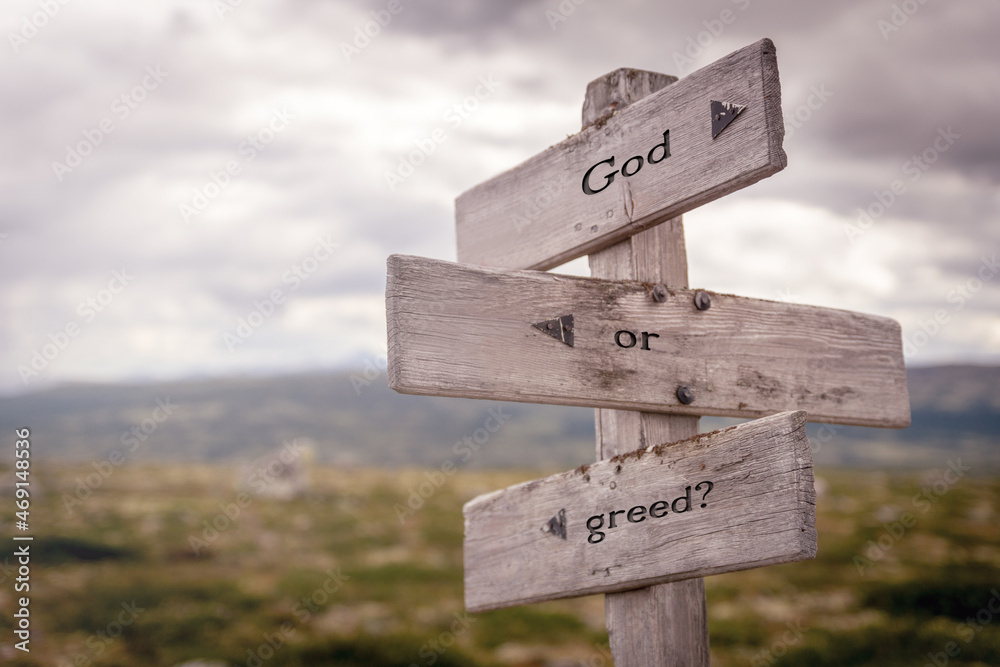
The mandate to care for others and share the wealth comes from above and below. Even the Bible acknowledge our obligations to earthly authorities. Paying taxes while being part of society fulfills our duties as citizens. Taxes on wealth are one avenue to provide for those in need. I’m no expert on tax codes and not a policy maker, and I’d probably be terrible at designing both. According to my results on the “3 Minute Test,” my answers suggest my level of greed is very low. “You may find that you are usually willing to give or share your resources and time. You may also have a very high tendency to be altruistic, optimistic, and trusting.”
I side with Eilish and Oates when it comes to Musk. Call me a bleeding-heart liberal. I consider it a compliment.
Categories: Living, Suzanne's Voice


 The Gloria Sirens