

When people call for public education to go “back to the basics,” it reminds me of “readin’, writin’, and ‘rithmetic,” essential knowledge for all time. Imagine a one-room, frontier schoolhouse, something out of Little House on the Prairie. Inside, under the tutelage of a schoolmarm, children read and recite or math it out with pencils they make from hot lead poured into the little grooves on their wooden desks. What kind of paper did children have before Big Chief tablets? There must have been paper, or maybe they used chalk and chalkboards that could be erased when they made a mistake? Did children using lead pencils also have erasers? Are erasers made out of rubber tree plants?
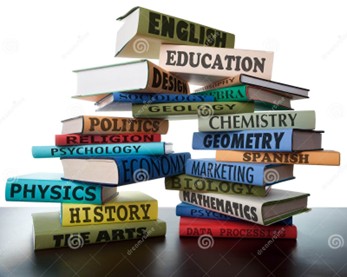
The phrase “back to the basics” begs the question, how far back in time do we want to go? In recent history, textbooks were deemed essential for students to read, learn from, and study. If I’m going to wax poetic about any changes in education, it’s the waning use of textbooks. (I have to admit, I treasure textbooks and keep a small collection.) Today, in large part, instead of textbooks, educators rely on digital resources and open-source material, content developed and distributed by regulating agencies that also govern standards and standardized testing. The absence of textbooks changes how reading and writing are taught, particularly in grade school when young minds are honing basic skills. More than one study has demonstrated the absence of textbooks does not benefit learning.
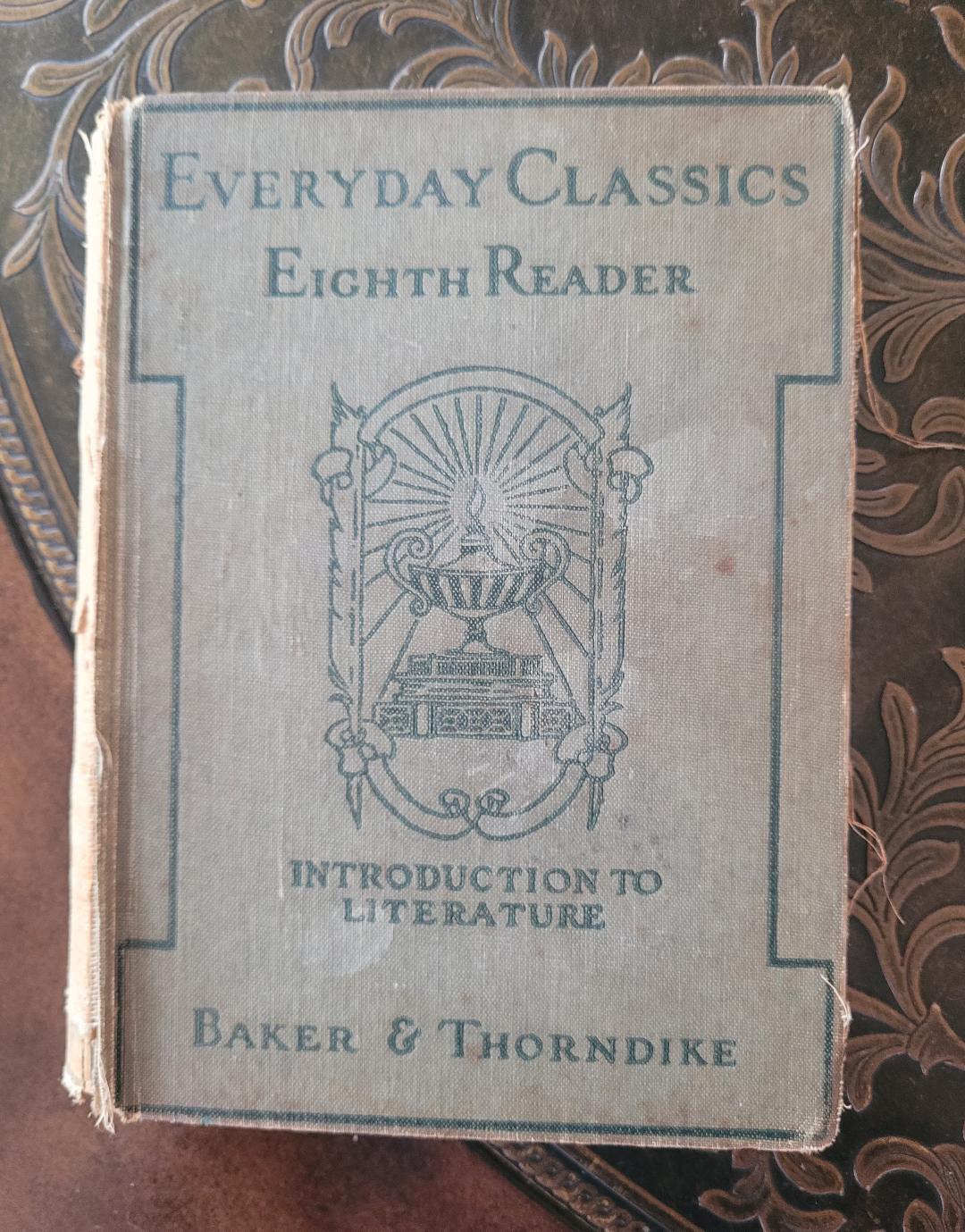
Introduction to Literature (1919) edited by Franklin T. Baker and Ashley H. Thorndike
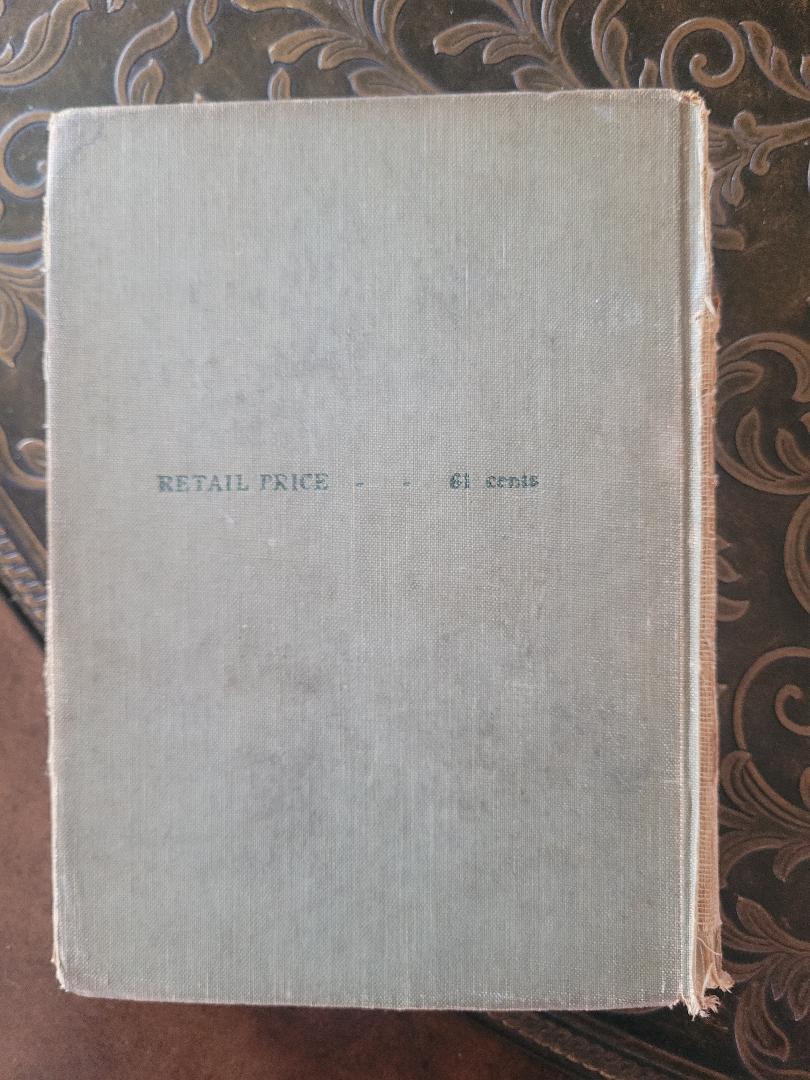
In my collection of treasured textbooks, I have an eighth-grade reader from 1919, Everyday Classics, Eighth Reader: Introduction to Literature, published by Macmillan. The table of contents includes writers and poets we’ve heard of, Wordsworth, Hawthorne, Shakespeare, Cervantes, Milton, and Dickens, for example. There’s a repugnant, short essay by Charles Darwin, “Impressions of Travel,” that could be used as a lesson on dehumanizing and offensive language. The textbook I own also includes an “Indiana Supplement,” where my particular edition was distributed.
The selections in Everyday Classics might be difficult reading for eighth graders in 2026. Only about one-third of students nationwide in fourth, eighth, and twelfth grades were proficient in reading in 2024, according to USAFacts.org. When I meet a young person, I often ask them about reading, and many of them confess they don’t enjoy the activity. I hear, “Oh, I only like graphic novels,” or, “I only like one book, The Outsiders.” It’s as rare as a blue tulip to meet a kid who reads for pleasure, and just as beautiful and hopeful.
If we want to get “back to the basics,” books and reading are at the top of the list. Arguably, the greatest testament to the importance of reading is The Narrative of the Life of Frederick Douglass, an American Slave. Douglass attributes his awakening to the importance of literacy as the motivation and means for his ultimate freedom. When Douglass was around twelve, he acquired a textbook, The Columbian Orator (1797), widely used in 19th century classrooms. Within its pages, he discovered a dialogue between a slave and master. The slave argues with the master for his freedom and is ultimately emancipated. Douglass also noted that the textbook included an essay by Sheridan that was “a bold denunciation of slavery, and a powerful vindication of human rights.” Reading these ideas, Douglass felt liberated but also defeated because he knew, in America, he was a slave for life. And then, just a few years later, he made and won his bid for freedom.
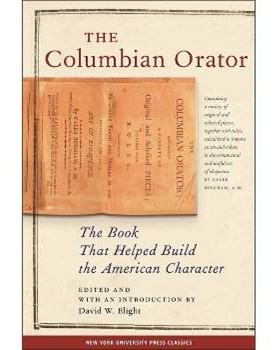
In my humble opinion, The Narrative of the Life of Frederick Douglass, an American Slave (1845) should be required reading for every 21st century student. Unfortunately, Douglass’s autobiography is one of the most banned books in America, erased from primary and secondary curriculums and disappeared from libraries.
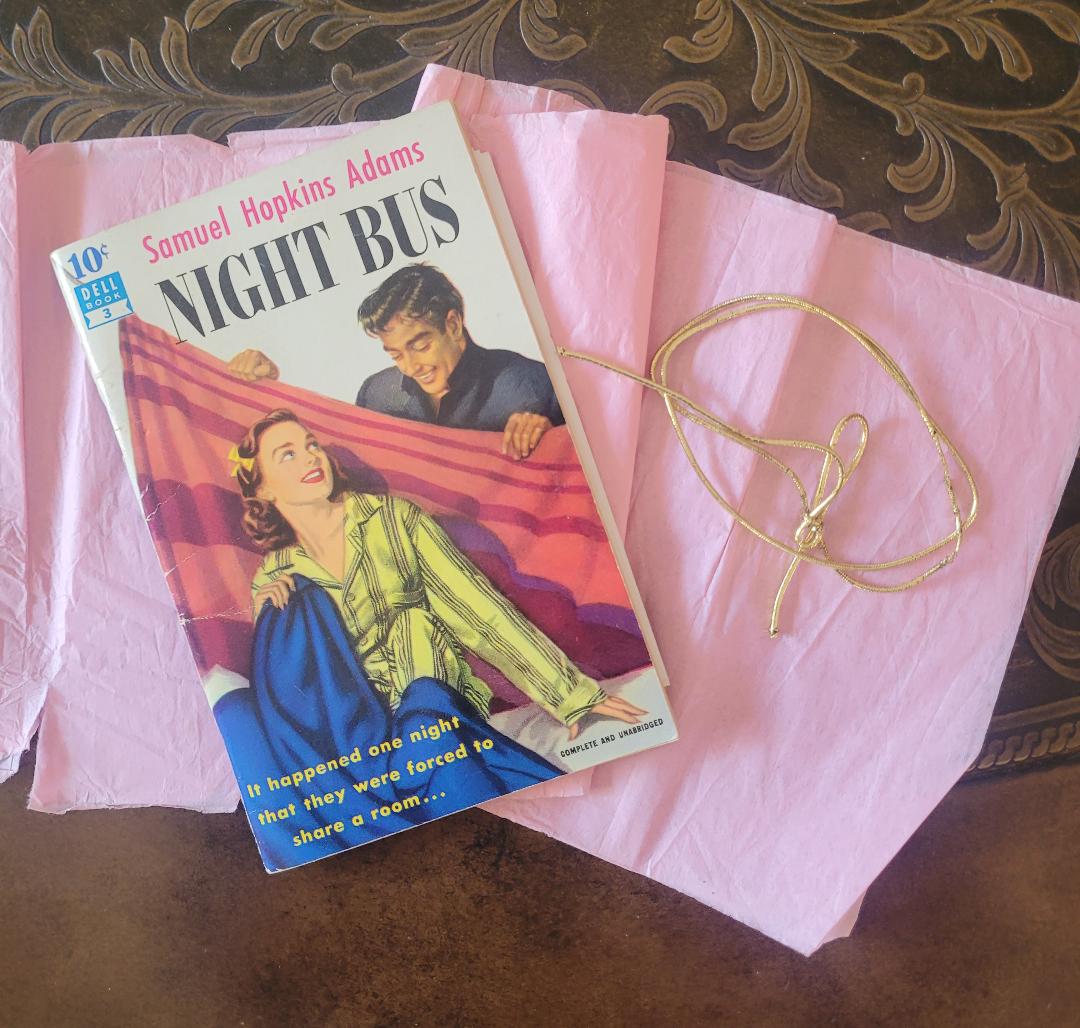
The joyful rub is that “banning” a book doesn’t remove it from the marketplace of goods and ideas. Late capitalism relies on supply and demand as its fundamental economic principle. I have rarely, if ever, searched for a book and not found it for sale. For example, I once taught a class on films adapted from short stories. I needed a copy of the Dell 10-cent book called Night Bus by Samual Hopkins Adams, which inspired the film, It Happened One Night, a 1934 romantic comedy directed by Frank Capra and starring Claudette Colbert and Clark Gable. The rare 10-cent Dell book cost a whopping eighty dollars and came wrapped in pink tissue with a stretchy gold ribbon. The point being, the book haters can ban Douglass’s autobiography all they want, and a million copies are still for sale.
In Everyday Classics, the eighth-grade reader for students of yesteryear, the textbook’s Preface offers a definition of literature that begins with humans “talking and living together in family and tribe” as they sing songs and tell stories about love, heroes, worship, war, and their deepest longings and feelings. The textbook makes grand claims, like, “Literature is very much alive to-day. Thousands of books are setting forth the ideas and scenes of the present time…. Literature is a record of human nature through many centuries and in many countries. Its great books have become the heritage of the race.”
I’m not sure how to sell reading and books to the powers that control public education, or to young people who are convinced they don’t like to read. Maybe we should try reverse psychology. Maybe we should tell kids they can’t read. Use illiteracy to keep them ignorant and down. Or we could make books valuable again. Require students to wrap their textbooks in brown paper to protect the cover from wear and tear. Require students to write their name in the book’s legend so future generations of students who inherit the textbook will see that Suzanne (née Chapman) once sat at a desk in a primary classroom and read the same pages.
Sources:
Banned Books of Guantánamo: ‘An American Slave’ by Frederick Douglass
What does Trump’s dismantling of the Education Department mean? | AP News
US Education System Fact Sheet: State of the Union 2026 | USAFacts
Narrative of the Life of Frederick Douglass | Project Gutenberg
.
Categories: Living, Suzanne's Voice


 The Gloria Sirens