

From my earliest days on Facebook, my husband said, “Social media is cancer.” I initially laughed him off. Now I believe he’s right, and I am finally angry enough to make the break. I can no longer invest my time or attention in the products of corporations that have intentionally done potentially irreparable damage to not only my children, but their entire generation.
What? How can I say such a thing? Surely I’m overreacting?

No. For summer personal development this year my school offered us a copy of Jonathan Haidt’s book The Anxious Generation: How the Great Rewiring of Childhood Is Causing an Epidemic of Mental Illness. This book is specifically focused on my children’s generation, what some call Gen Z, born between 1995 and 2010. In this book, Haidt argues that smartphone apps “hooked children during vulnerable developmental stages, while their brains were rapidly rewiring in response to incoming stimulation. This included social media companies, which inflicted their greatest damage on girls, and video game companies and pornography sites which sank their hooks deepest into boys. By designing a firehose of addictive content that entered through kids’ eyes and ears, and by displacing physical play and in-person socializing, these companies have rewired childhood and changed human development on an almost unimaginable scale” (4).

How has social media harmed girls? Haidt’s book details that not just in the U.S., but all over the English-speaking world (he also has some, but less, data from other areas of the non-English speaking world, but it’s not as overwhelmingly clear) teen rates of self-reported anxiety and depression rose by almost 150% between 2010 and 2020 (24). Since, he acknowledges, this self-reported data could be attributed to increased comfort in admitting to anxiety and depression, he also shows data from hospital reports of teens entering emergency rooms because of either suicide attempts or self-harm. Girls visited emergency rooms for these reasons over 180% more between 2010 and 2020 (pre-pandemic) than ever before. Successful suicide attempts among girls also rose over 150% in this time frame (31). This is not to exclude boys, whose self-harm and suicide rates also rose by over 50%–but boys seem, according to Haidt, more influenced by screen-based lives to experience “failure to thrive”–the inability or unwillingness to get a job, leave home, and start a life because the real world does not provide the mental stimulation boys receive from video games and/or pornography.

Though the statistics are staggering, many readers with Gen Z kids may think, “That didn’t happen to my kids/grandkids.” First, be incredibly grateful. Second, think about your kids’ or grandkids’ friends–has it happened to any of them? (I think you’ll find it has). Third, that’s because many who read my blog who I personally know can say three or more of these things about their teens: a) s/he did not have a smartphone before high school; b) s/he engaged in one or more sports; c) s/he engaged in artistic activities that put her/him in face-to-face, real-time contact with peers; d) s/he engaged in some form of spiritual practice; e) s/he worked a part-time job; f) s/he had face-to-face family dinners at least three times a week.

Granted, a teen could have done all of these things and still experienced anxiety and depression that led to suicidal ideation, suicide attempts, or self-harm. I suffered from such deep and debilitating anxiety and depression in my teen years, with no phones in sight, that I thought at some points it might be better to not exist. This is because I have a genetically-passed mental illness that I am very fortunate is incredibly responsive to antidepressants. So no, we cannot blame phones, or our parenting, or our kids, for all mental health issues. Some of it is unfortunate and unavoidable, and I don’t want any of my readers to feel any sense of shame or blame about any of this. For those who are not genetically predisposed to mental illness, however, the blame for the increased incidences of suicide, suicidal ideation, and self-harm must go where it really lies–on the companies that are, like those in the sugar industry and the illegal drug industry, poisoning us and our kids in pursuit of profits.

I know, anecdotally, that access to a smartphone has been a double edged sword for my children and their peers, some of whom have been my students. During the pandemic, the only way teens could have their much-needed social time with friends was through virtual communication through either computers or phones, and phones are definitely helping many of us keep in contact with faraway friends and family. At the same time, teens and young adults also often feel bound to their phones. They know they have a hard time putting them down, they know they are “addicted” to social media, and they wish it could be different. A year ago I created an assignment for my religion class asking students what from their life they wanted to keep, and what they wanted to let go. Almost 100% of them said they wanted to let go of their phones, but admitted they wouldn’t because “they’re too necessary.” The question we didn’t have time to explore is to what extent something we’re addicted to seems like a need, rather than being a true necessity.
But why do so many teens have this love/hate relationship with their phones? I think it’s because, on some level, they know the damage those phones are doing to their minds. Haidt details what he calls the “four foundational harms” of social media use in his book: social deprivation, sleep deprivation, attention fragmentation, and addiction.

Smartphones harm face-to-face relationships. When my kids were in high school, before the pandemic, they would sometimes find themselves sitting with their friends at lunch only to see everyone on their phones. They coined the phrase, “together, but apart.” Haidt explains this effect of smartphones as devastating “the lives of Gen Z by connecting them to everyone in the world and disconnecting them from the people around them” (122). When my daughters or their friends reached for their phones during face-to-face interactions, the person who reached for her phone knew she was hurting those in her presence, but explained “it’s like a compulsion. When the phone buzzes, I have to reach for it. What if it’s something important? And even when it’s not, once the phone is in my hand it’s hard to put it down.” Eventually my girls’ friend group would assign a specific ring to only their parents’ texts or calls so they could to ignore everything else until they were on their own.

The problem is, once they were on their own, they were often in their homes–or worse, in their bedrooms–with their phones. This led to scrolling way too far into the night, or binge-watching sites like Netflix. Haidt writes that the CEO of Netflix even said, in a call to his investors “when you watch a show from Netflix and you get addicted to it, you stay up late at night. We’re competing with sleep, on the margin” (125). And you know what happens when teens don’t get enough sleep? They “cannot concentrate, focus, or remember as well . . . [t]heir learning and their grades suffer . . . [t]heir reaction times, decision making, and motor skills suffer . . . [t]hey are more irritable and anxious throughout the day, so their relationships suffer” (Haidt, 125). Did I see all of this happening to some extent with my daughters and their peers? Absolutely. That’s why I made them put their phones on a charger outside of their bedrooms at night.
During their waking hours at home, though, their phones were with them, and all manner of notifications would come through. Haidt points to studies that estimate an average teenager receives “192 alerts per day” or “11 notifications per waking hour or one every five minutes . . . just for the apps that are about communication” (126). Imagine being interrupted at work every five minutes, as an adult, with a developed prefrontal cortex who thus has more control over automatic responses to stimuli (i.e. more able to delay gratification). It’s amazing any kids are passing any of their classes with this level of distraction in their lives. At one point my older daughter put an app on her phone that measured her social media use time and passed the consequences of over-use on to a little digital plant. The plant would thrive in the time she remained offline, and wither in the time she spent on social media. We also put external limits on the hours our kids could spend on internet sites using a device called the Disney Circle. Both of my daughters were so distracted by texts and Instagram notifications they put their phones on airplane mode while studying.

This, however, was before the pandemic. Once March of 2020 hit, all bets were off. School had to be done online. Socializing had to be done online. Life moved into virtual space. It derailed every attempt, every measure, every ability to limit our children’s time on screens. If there is one lasting effect the pandemic still has on our family, it is that turning to screens for distraction, comfort, and interaction has become automatic and constant. We are all addicted.
And it is this addiction that infuriates me the most. It is the breaking point for me, and the reason I have decided to leave behind Facebook, my limited Instagram interactions, and all of my phone games. See, in the beginning, I thought that the addictive part of social media was a result of the natural human desire to connect with others. When I was writing my dissertation in 1999-2000, I was so incredibly optimistic about the ways the internet would connect teachers, learners, writers, and people all over the world. The amazing conversations we’d have in virtual “salons” was a facet of the digital utopia I thought we were building. I think many people felt, to some degree, the same. When Facebook came out, I thought it would be part of that community-building. And it could have been if the developers had not gotten greedy. Because Haidt’s book revealed to me something I had not known until reading it this summer. It may be because I am uninformed, looking at the wrong sources, or distracted by the work of raising two Gen Z kids in the midst of a global pandemic. But here it is:

In 2021 a whistleblower named Frances Haugen released what Haidt describes as “The Facebook Files–the trove of internal documents and screenshots of presentations” that show “Facebook intentionally hooked teens using behaviorist techniques” (135). Yes, that’s right, behaviorist techiniques, built upon the 1940’s psychological theories of B.F. Skinner who learned how to create addictive behavior in animals. Facebook’s programmers applied these measures to people–to us and to our children–intentionally. Hooking us was not a bug–it was a feature. It was not an accidental side effect of trying to create a more connected world. It was a calculated application of behavioral conditioning to increase their advertising profits.

Here’s Haidt’s explanation of how it worked: “when an action is followed by a good outcome, (such as gaining food, or relieving pain, or just achieving a goal), certain brain circuits involved with learning release a bit of dopamine [which] feels good . . . But it’s not a passive reward that satisfies us and reduces our craving. Rather, dopamine circuits are centrally involved in wanting, as in ‘that felt great, I want more!'” (130). Haidt explains that this is true of any addictive substance from drugs to sugar to . . . slot machines. Indeed, he said, “The creators of these apps use every trick in the psychologists’ toolkit to hook users as deeply as slot machines hook gamblers” (130).
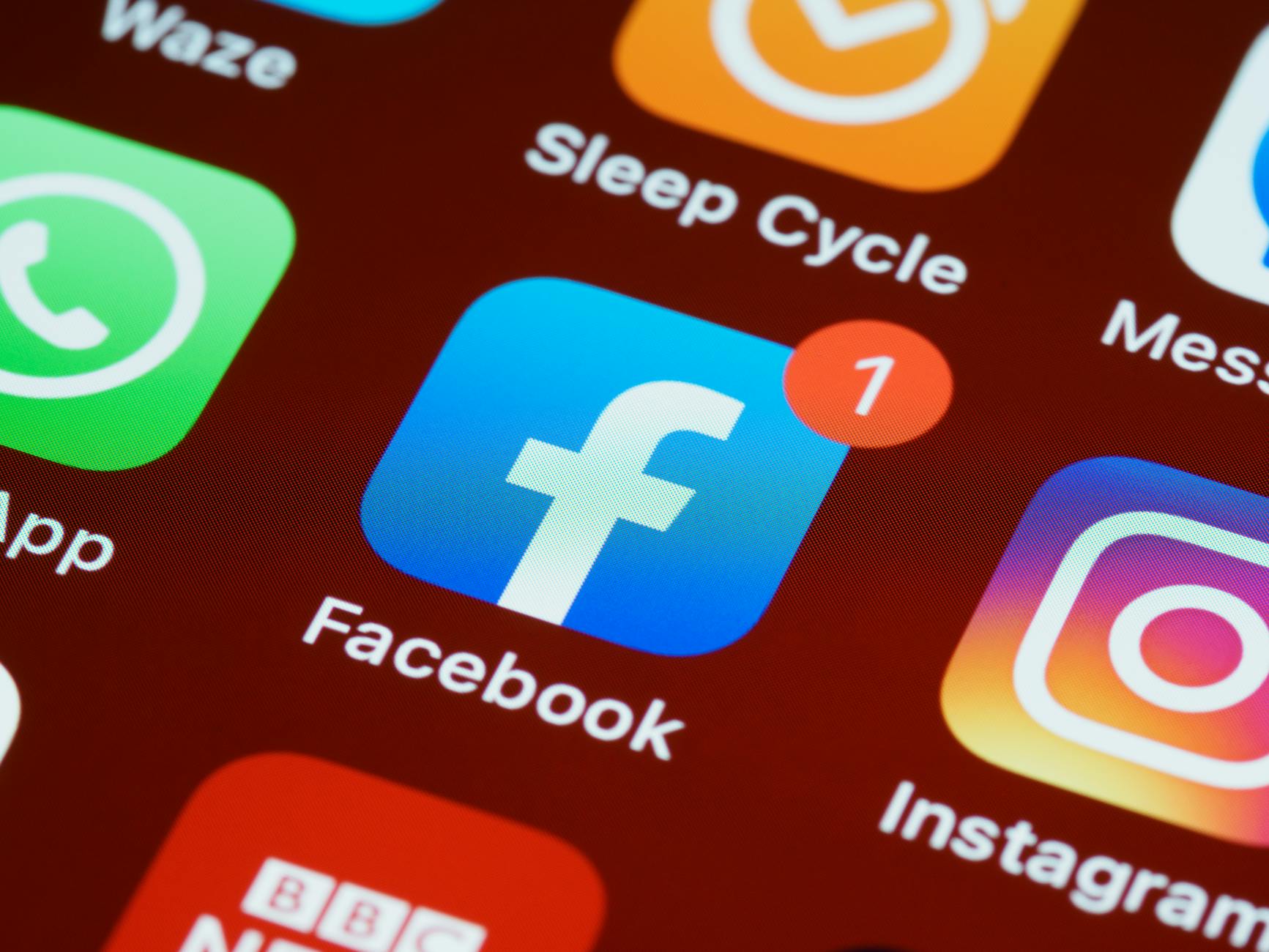
Of course, Haidt acknowledges, some teens are not addicted, but “whether they are on Instagram or playing Fortnight . . . their desires are being hacked and their actions manipulated nonetheless” (130). This has been, of course, a goal of advertisers since the times of newspaper ads, but, Haidt says, “touch screens and internet connections opened vast new possibilities for employing behaviorist techniques, which work best when there are rapid cycles or loops of behaviors and rewards.” This cycle begins with either an external trigger (like a push notification from an app) or an internal trigger (a desire to see if anyone has liked their post, or to achieve something in an online game). Once triggered, the person takes an action that had previously been rewarded–either by an interaction on a social media post or an achievement in a game. But here’s the trick–the reward is variable. One of the major discoveries of behaviorists is that an animal will perform the same action over and over if that action randomly pays off. In social media, sometimes people have interacted with the post and in video games we do sometimes achieve something–but sometimes not. And it’s that variable award step that keeps people coming back, again and again, for more and more and more.

According to Haidt a user is considered “hooked” when his or her “own feelings are enough to trigger a behavior that gets variably rewarded” (133). And the blueprint for specifically hooking teenagers is found in those leaked “Facebook Files,” in a presentation called “The Power of Identities: Why Teens and Young Adults Choose Instagram.” Haidt explains that presentation has a section called “Teen Fundamentals” that shows extensive research into how a brain matures during puberty, with an MRI picture of the teen brain with a caption about how a teen’s brain is incredibly susceptible to the reward system explained in behaviorist neuroscience.
Facebook targeted my children for profit. And I know all companies do that. But in doing so, this social media company created behaviors as hard to break as the sugar industry. And just as we all have to eat, but with awareness can limit foods that are poisoning us with sugar, we do need to engage with others through screens, but with awareness can limit apps that are also poisoning us. Facebook, Instagram, and TikTok are some of those apps.
So, what to do? I am heartened by the ideas in David Eagleman’s book Livewired: The Inside Story of the Ever-Changing Brain which point out that the brain is incredibly malleable and can rewire itself in amazing ways even after physical trauma. Eagleman’s book gives me hope that, with time, all of us who find ourselves virtually addicted to our screens may be able to rewire ourselves to less dependence on the disembodied existence we live in video games and/or on social media. However, I have to start now while my children are still living with me at home for a few months not only to model digital detox, but to get their help with it both for myself and in hopes they will follow me to a greater or lesser extent in at least becoming more mindful of how they are engaging with life online vs. in the real world.

Other than leaving behind social media, what are my next steps? I am going to:
- put my phone away when I am interacting with my family and friends; if there’s something I need to look up, I will write it down in a notebook for later.
- use my laptop, rather than my phone, for looking things up.
- leave my phone in a room away from my bed (which means I won’t respond to texts after 10pm).
- invest in a Kindle Paperwhite to read books rather than using my iPad.
- go outside, every day, and engage in a screen-free activity like walking, going to the gym, swimming, or yoga.
- delete gaming apps from my phone.
- find a book about breaking away from internet and video gaming addictions – someone must have written one already.
- make plans that get the entire family out of the house and off our phones.
- schedule times for playing the one video game I will still engage with, and play mindfully.
- find non-screen-based hobbies like quilting, knitting, or crocheting to keep my hands and eyes active while listening to podcasts

If anyone has other ideas about how to fight screen-addiction, please feel free to leave it in a comment. I’ll need all the help I can get.
Now, what this means for my readers is that you are going to have to subscribe either to this blog, or to my personal blog site “Unicorn Dreams” for notifications when I post. By the end of July I will be deactivating my Facebook and Instagram accounts (though I will still be on LinkedIn because of my non-profit work) so I will not be on Facebook any more to provide links to my writing. If you are a friend of mine on Facebook and don’t have a way to contact me except through that app, send me a message this month through messenger and I’ll sent you my email address and/or phone number.

I don’t want to lose contact with my friends or my readers. I want to end the abuses of social media. My most fervent wish is to burn it down with a mass exodus that tells its creators “We know what you did to us and to our children, and we will no longer be a part of it.” I realize the irony inherent in conveying this message through a screen. Don’t think I don’t. But while I loathe social media in all its forms, I truly do hope we can find a way to use these screens in ways that are based not on manipulation and profit, but communication and connection.
Categories: Diane's Voice, Health, Living, Sister Sirens


 The Gloria Sirens
You took FB way to seriously. Its actually a satirical soap opera mostly speculative.
LikeLike
Great ideas! You might also read How to Break Up with Your Phone by Catherine Price. She has a website with more info and ideas, and her new book on fun looks amazing!
LikeLike