
The cicadas have just begun to sing in West Virginia, yet for many students and teachers in the U.S., it’s already “Back to School” time. In some ways, getting ready to go back to school hasn’t changed since I was a kid. People still shop for new school clothes, shoes, and supplies; kids are assigned new teachers in new grades in different classrooms, where scintillating lessons await to be taught and learned.
On the other hand, it’s 2023, and education is not your grandfather’s root beer. For one, the national academic calendar is dead, and the school year starts earlier than ever. According to Pew Research Center, “‘Back to school’ means anytime from late July to after Labor Day, depending on where in the U.S. you live.” Earlier starts are more common in the South and Southwest, with later starts dominating along the East Coast and upper Midwest, with tourism and hospitality industries cited as reasons.
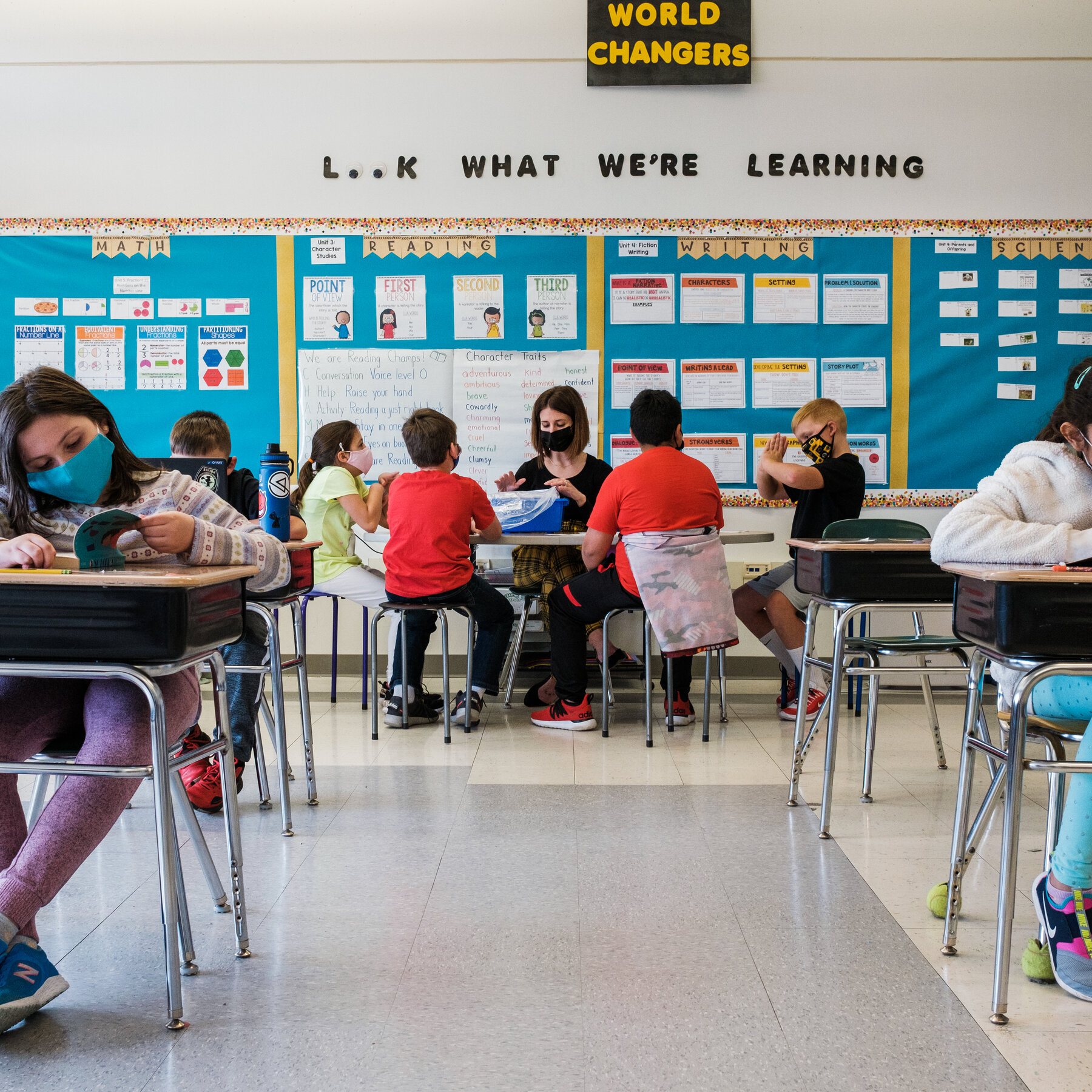
No matter the date, when students show up at school in fall 2023, some might need remediation. According to the National Assessment of Education Progress (NAEP), student scores in reading and math have not returned to pre-pandemic levels, though once again this varies by region and involves more than a single malevolent virus. Public education is currently fraught with conflicts about the best ways to learn, curriculum, equitable funding and resources for every school, attitudes toward teachers and the teaching profession, school safety and security, student mental health, classroom discipline, and chronic absenteeism. It’s no wonder kids are falling behind.
When it comes to the best ways to learn, it was fascinating to read Peter Hessler’s report on the Chengdu Experimental Primary School in “The Double Education of My Twins’ Chinese School.” Hessler and his wife, Leslie T. Change, author of Factory Girls (a riveting account of labor, factories, and young women), made the decision to enroll their twin daughters in an elementary school in China for two years so the girls could learn Mandarin and experience their Chinese heritage.
The elementary school Hessler described was wonderfully familiar: children, teachers, classrooms, learning goals, and assessment. What blew my mind was the way the curriculum for second and third grade students integrated reading and math. The “word problems” Hessler provides includes this one: “While multiplying one two-digit number by another two-digit number, Little Sloppy misreads 22 as 25, and as a result his answer is higher than the correct answer by 69. What is the correct answer?” Hessler aptly notes, “Even the problems had problems—students had to figure out what the question was really asking, and which information was extraneous.” Reading and math intersect to inspire critical thinking. He also writes, “In math, whenever a student drew a line in an equals sign, a minus sign, or a division sign, she was required to use a ruler.” Hessler says this was part of the “overall emphasis on efficiency,” though I like it for another reason. The use of the ruler requires students to pay attention to small details, another element of critical thinking.
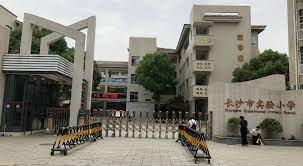
Ultimately, Hessler’s comparison of elementary education in China versus the U.S. found both systems “had a tendency toward extremes, and deeply entrenched systems resisted reform.” His main concern in China was the competitive nature of education that puts pressure even on kindergarten students. On the other hand, Hessler notes the respect for teachers and their authority in China, and teachers’ satisfaction with their profession, which influences the learning environment.
Teachers in America aren’t always so respected; often, they’re completely burned out. Source after source reports teachers leaving the profession for a variety of reasons: low wages, unreasonable workload demands, lack of mental supports for students, inadequate support staff, and school violence. I have elementary school teachers in my family, including my daughter, two nieces, and a sister, and many teachers among my friends. Almost all of them have Classroom GoFundMe’s this year so donors can purchase resources to be used in their classrooms. Almost all of them have side hustles to make extra money to pay the bills, both during the school year and on summer break. The website TeacherGoals.com has an interesting list of suggested side hustles, including becoming a notary public, a delivery driver, cleaning houses, renting out your basement as a storage unit, and listing your car as a short-term rental, I guess because teaching professionals don’t all earn a living wage.
Equitable funding and resources for every teacher and public school in America is still a pipe dream. Not all children arrive at the same starting line. Evidence of the disparity can be illustrated by comparing weekly grade-school newsletters in Milwaukee, Wisconsin. Each school in Milwaukee Country has a Parent Coordinator who generates a newsletter with important information for parents about dates and school opportunities and events. In inner city schools, like the Academy of Accelerated Learning where my daughter teaches, the newsletter features information like job fairs for parents, temp agencies currently hiring, free summer camps, clothing giveaways, food pantries, summer lunch programs, free library programs, and other services. Right next door is the wealthier suburban district, Greendale School District. Their newsletter features opportunities for donating food and clothing, volunteering at community events, maybe sponsoring a child at Christmas, or participating in other charitable causes. The information in the newsletters radically exposes the have/have-nots divide.
Information sharing is an idea also discovered in Hessler’s essay about Chengdu Experimental Primary School. All parents with children at the school joined a WeChat group and participated in information-sharing in a structured and efficient way with nuances that are intriguing. Hessler says parents never complained to or about teachers or expected teachers to repeat information after its first announcement. Parents had to be accountable for the information they needed to know. Maybe absolute respect for teachers is extreme, as Hessler noted, though he seems to admire the practice. I think in America the opposite is true; increased respect for teaching professionals would be a welcome reform.
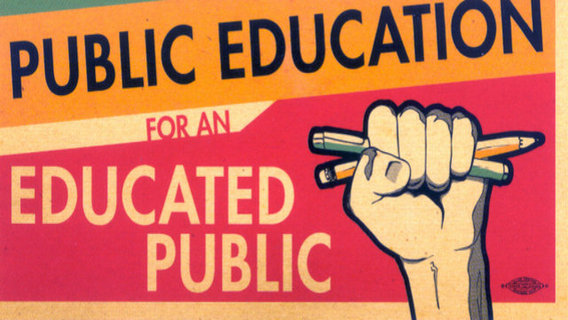
With all the problems in education that remain unresolved, it’s amazing that anyone wants to go “Back to School” in 2023. And yet there’s excitement in the air as students and teachers, parents and communities, get ready for school to commence. Sixteen states, including West Virginia, have designated days when no taxes are due on purchases of school clothes, shoes, and supplies. And what do kids need? The hot-back-to-school buys, according to CNET.com, are a power bank for easy charging of devices on the go, backpacks designed to protect devices from bumps or falls, and Palomino Blackwing 602 pencils for the luxury price of $35 a dozen.
They must be extraordinary pencils. My old No. 2s are rolling over in their graves. In spite of all the ways education is troubled in America, we still look forward to “Back to School” time. Where there is the desire to learn, there is hope.
Categories: Living, Suzanne's Voice


 The Gloria Sirens
I’m impressed at the critical thinking required by the marriage of math and reading problems that is cited in the example of the differences experienced in a Chinese elementary school.
LikeLike
Me too! Many of the details Hessler provides are fascinating. His article is definitely worth a read.
LikeLike
Suzanne, you mentioned this article in passing, and I had no idea it would be so interesting. Great post. Thanks for writing it.
P.S. Palomino Blackwing pencils are the brand of choice in our house. They really are fine pencils! A box of them seems to last forever.
LikeLike
They are on my to-buy list. I love a good writing implement.
LikeLike