


American’s whale-sighting author, Herman Melville, would be 206 years old if he were alive today. His life has always had a kind of symmetry for me because he was born in 1819 and died in 1891, a palindrome of years in the heart of the long, tumultuous 19th century. He had adventures at sea when he was young, but his later life was a long stretch of mundane existence when mostly what he did was write. He wrote novels, short stories, poetry, personal letters, reviews, essays, drafts, and he journaled
He published widely but earned little money for his work after his first novel, Typee. His commitment to writing in the face of near poverty looks beatific now. Back then, some folks said he was wasting his time, including his wife on occasion, and the literary critics who mercilessly blasted his work. Some people say success is the best revenge. Most 21st century Americans know Melville’s name.
But that’s not why I envy Herman Melville. My envy comes from an experience he had later in life, during what we might call a mid-life crisis of depression that was so enervating, his family was alarmed. To cheer him up, the fam all chipped in and sent him on a trip to the Holy Land! Not a week-long package vacation, but a journey by ship that took roughly seven months and included stopping off in Europe.
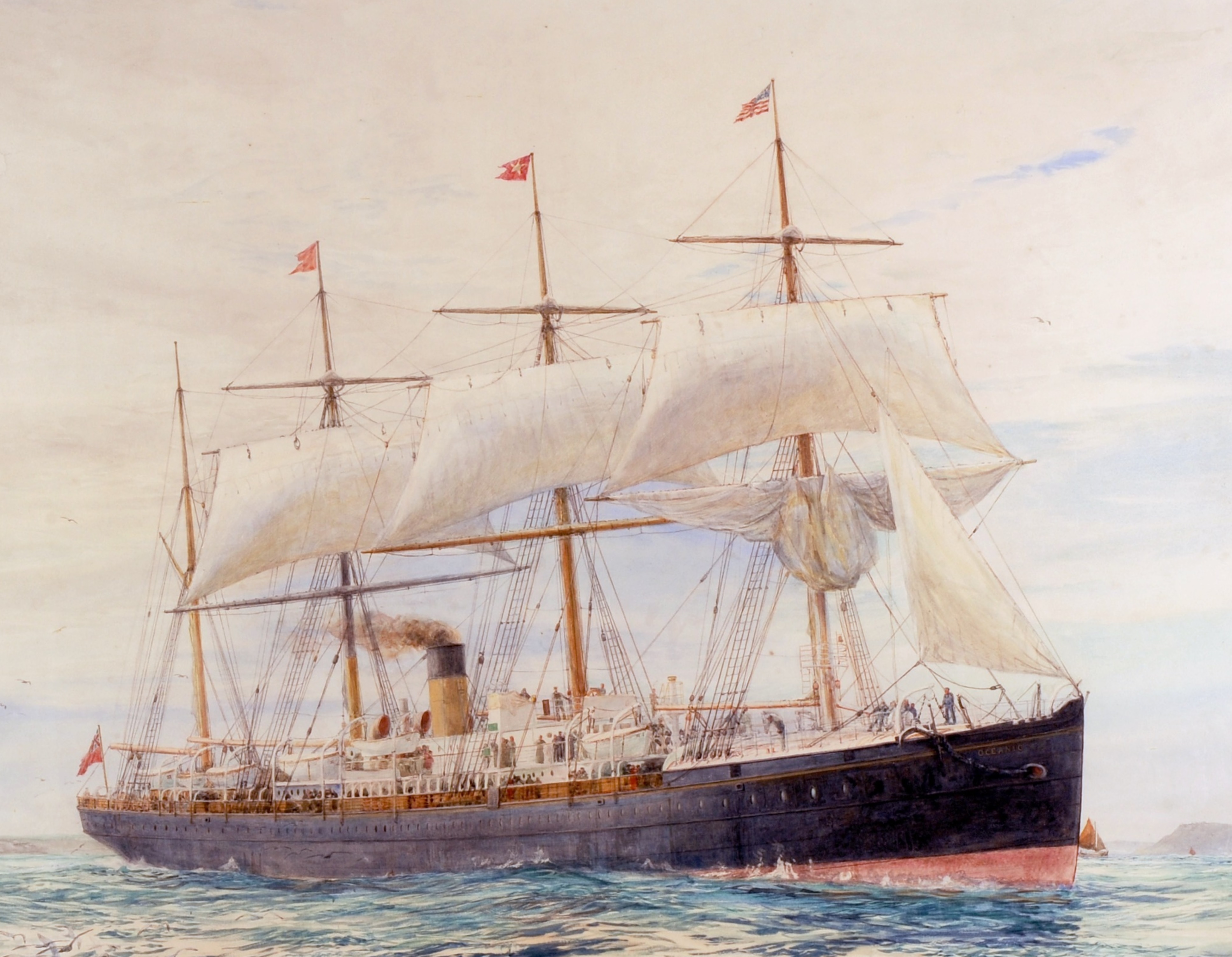
I want the equivalent of a seven-month Holy Land trip paid for by family donations. I want to show up at New York harbor with my steamer trunk packed, pay for my ticket, and board a ship. I want to a land on shores devoid of Marriotts and McDonald’s. In 2023, Marriott had over 8,700 properties in 141 countries and territories, just to be clear. I envy Melville because he traveled freely in a minimally homogenized world that included a diverse body of other citizens and places, not that I’m trying to romanticize his era. It was strange and dangerous in ways different from today. Sometimes travelers sickened and died, and their families might never learn of it. On the other hand, the documents needed to travel were near effortless to obtain. In late 1867, when Melville’s ship docked near Liverpool, he met Nathaniel Hawthorne at the consulate, and Hawthorne made out Melville’s visa for him to travel on to Palestine and even signed it for him.
Luckily for Melville, he survived his lengthy excursion and arrived home again to tell the tale. He spent nineteen days in the Holy Lands, mostly in and around Jerusalem, and nineteen years writing an epic poem about his experience. Clarel is a kraken of a text, longer than the Iliad, longer than Paradise Lost. At nearly 18,000 lines of rhyming couplets, Clarel is the lead contender for the longest poem in American literature. Having opened its pages, I can vouch that it’s near impossible to read from beginning to end, which would probably take another nineteen years. I bet there aren’t more than one thousand readers in the Clarel Club, as the late Dr. James Sappenfield named the readers who studied and digested Melville’s opus, if it’s fair to call Clarel an opus.
I envy Melville’s passion as a writer, even if I can’t match his passion as a reader. In 2005, I was assigned to read Clarel in a graduate school seminar on Melville taught by Sappenfield, as we called him. I gave it my best. We had two weeks. I wanted to be in the Clarel Club. I made copious gist notes in the margins of the first book of the text, “Part One * Jerusalem,” but that’s as far as I got. The poem is 499 pages long in the Northwest-Newberry edition (1991).

The passage that has lingered in my mind for twenty years, Canto 41., involves writing on a wall in the cell-like room where Clarel, the title character, lodges in Jerusalem, maybe because it seems emblematic of Melville’s quest to “get hold of a definite belief,” which is how Hawthorne describes his friend’s desire after they met at the Liverpool consulate. Hawthorne wrote in his journal, “He can neither believe, nor be comfortable in his disbelief, and he is too honest and courageous not to try to do one or the other.”
Jerusalem is a city of walls where visitors like Clarel often linger to observe who comes and goes through the city’s gates. One evening at dusk, Clarel leaves his post to return to his lodging, where for the first time he notices a pale penciled message where the lime paint is flaking away on a wall in his room. He reads the passage and is moved by its sentiment of faith, a voice turning away from “the world that does renounce Him” (line 110). Was the message a sign left for Clarel by Divine intention? When he gets the chance, he asks the innkeeper who might have written on the wall.
The answer is distinctly non-divine. The words on the wall were written by a previous occupant, a young Englishman who left behind two books, one detailing the life of a saint, and the other a socialist text that references “Proudhon and the Communist,” texts with vastly different world views that lead to no conclusion (line 136). Clarel is disappointed, and so his quest goes on, as did Melville’s, who continued writing till the end of his life when he left the unfinished manuscript of Billy Budd.
I envy Melville for his faith in the work of writing against so many odds. He’s in the same camp as Van Gogh, Kafka, Dickinson, and Blake, and all the individuals who keep writing or painting or making art because it’s a way of life. How fortunate to be counted in that number. As for me, I’d still like to be in the Clarel Club. Maybe I should start a reading group, or a Holy Land tour go-fund-me.

Works Cited: “Clarel, A Poem and Pilgrimage in the Holy Land” by Herman Melville, The Writing of Herman Melville, vol. 12, edited by Harrison Hayford, MacDougall, Parker, and Tanselle. The Northwestern Newberry Edition, 1991.
Categories: Living, Suzanne's Voice


 The Gloria Sirens